
Cities for human and more-than-human: How GreenInCities captured Europe’s imaginations this summer
May and June 2026 marked a vibrant season of European Events, and GreenInCities has been in non-stop action across Europe this summer, sharing our core mission: co-creating urban spaces that do not just serve humans, but actively welcome and protect our non-human stakeholders.
Whether designing for the flying squirrel in Helsinki or the goosander duck in Birštonas, we are showing Europe that nature is an active citizen that deserves a seat at the design table.
Here is a look back at how we brought our singular more-than-human design approach to some of the most influential european event stages this summer:
Scaling Nature-based Solutions at the Mission Cities Conference in Torino
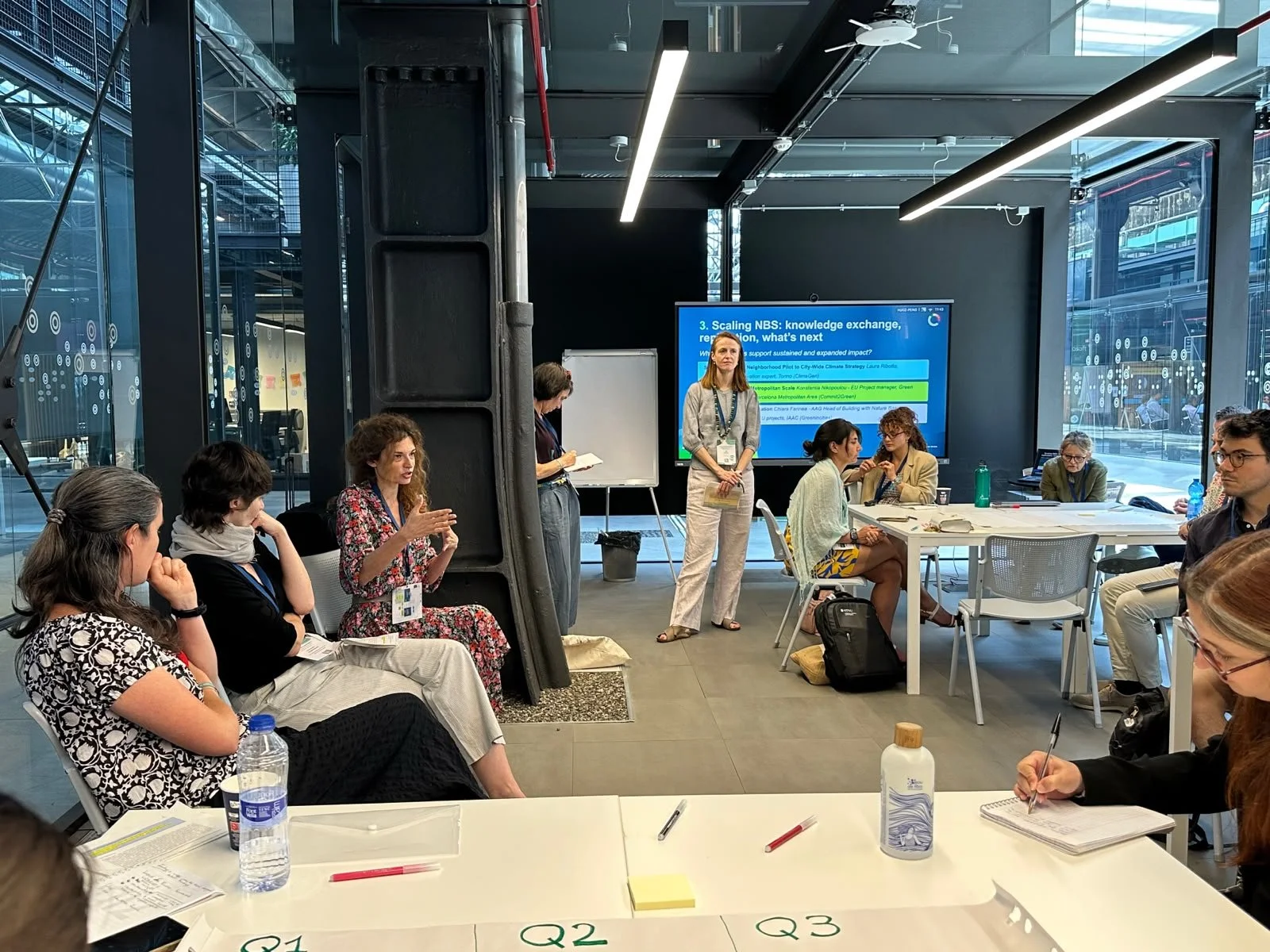
IAAC and Fab City Foundation (FCF) attended the Mission Cities Conference on behalf of GreenInCities. The Project Coordinator participated as part of a roundtable speaking on the topic Scaling Nature-based Solutions (NbS): knowledge exchange, replication, what comes next. This was followed by a question and answer session with participants where the Project Coordinator received questions on the more-than-human approach. In response, she explained how the approach has been implemented in the Barcelona Pilot from the co-analysis through to the co-design phase.
A Celebration of co-creation with our GreenInCities Living Lab Satellite Events
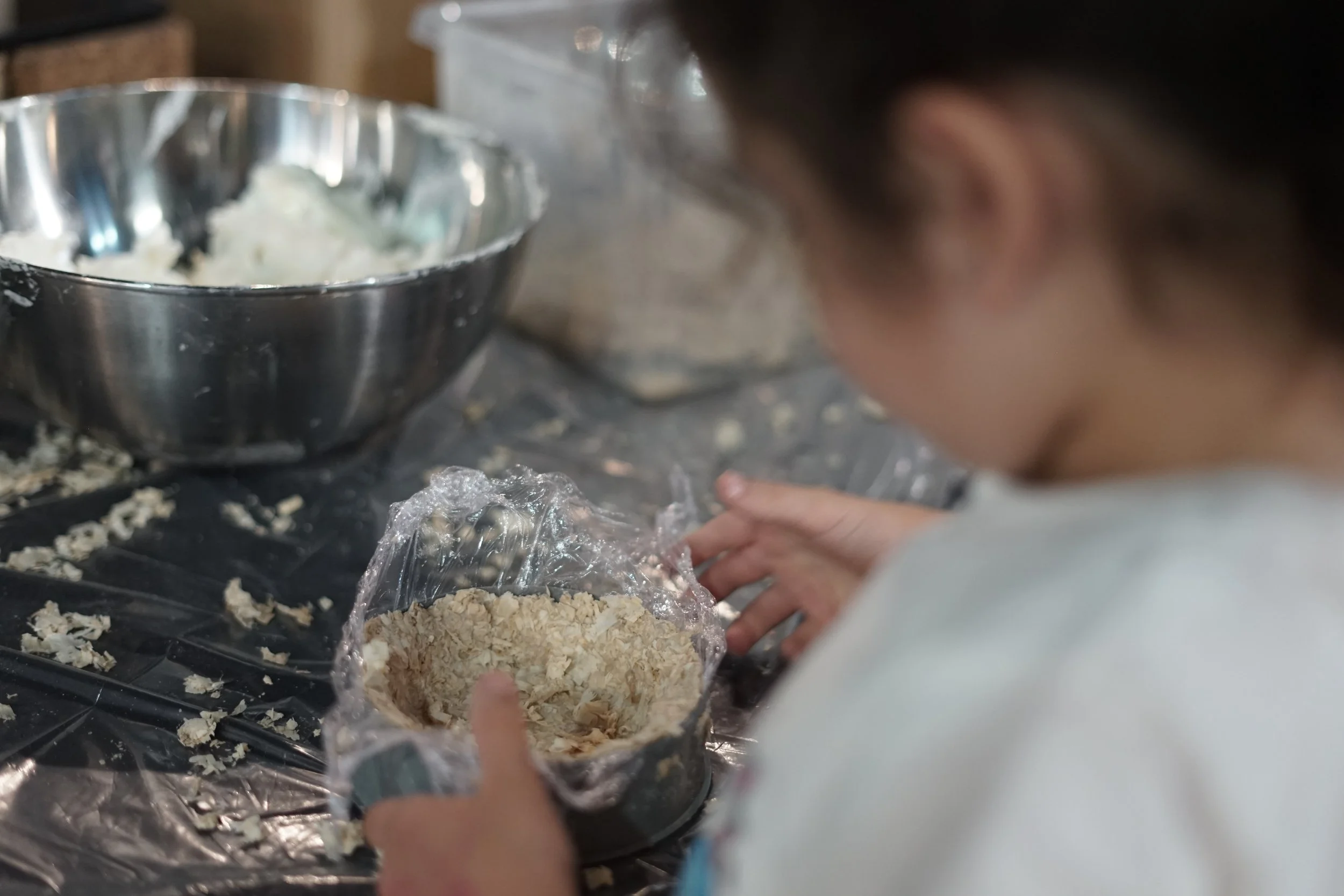
Barcelona focused on an event to raise awareness about the pilot and provide opportunities for citizens to connect with the themes of the pilot project – designing more-than-human public spaces and circular design. Through a series of stations participants were able to create seed bombs, create biomaterial pots and identify and draw local plant species. The event was organised by IAAC and FCF and allowed for the presentation of the finalised pilot project.
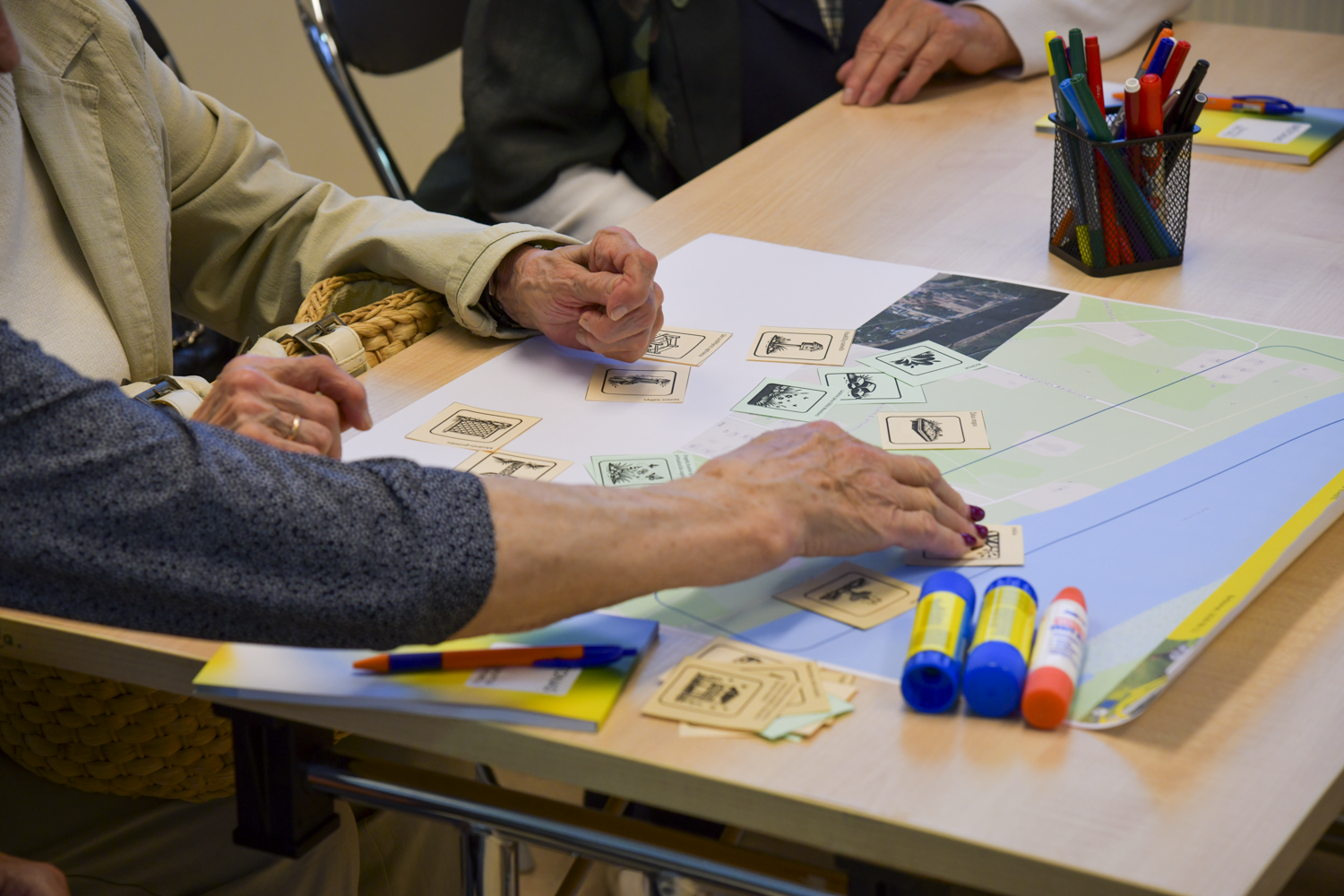
Birštonas hosted the Nature Wisdom Circle to generate intervention ideas for the Nemunas riverside with senior residents. The Birštonas Municipality and KTU arranged a series of sessions that explored central topics such as climate change, NbS, digital twins and AI-assisted visualization, merging technologies with participatory processes. The results of the workshop form part of the co-design phase for Birštonas.
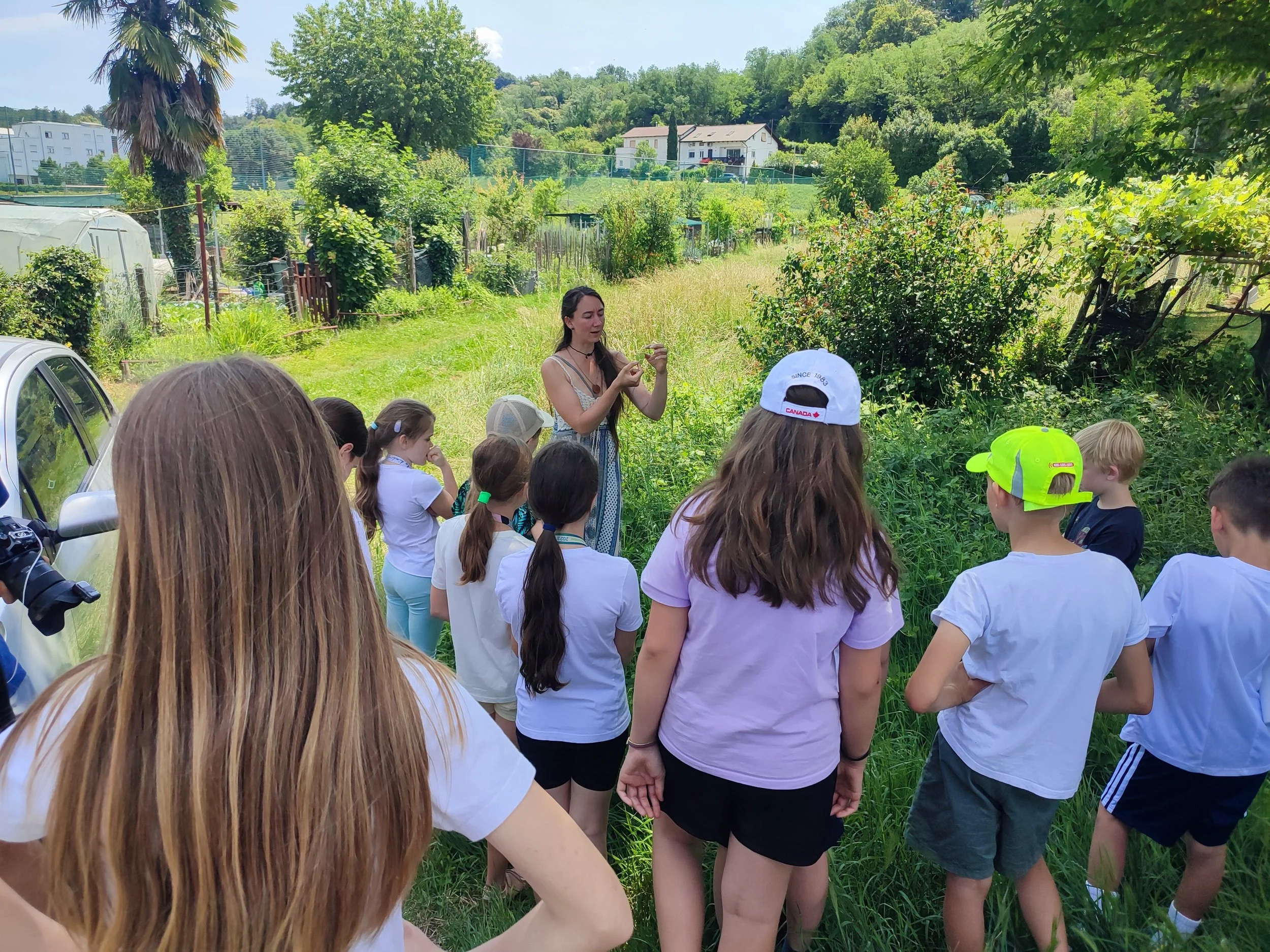
Nova Gorica KolodvorFest (Commons Garden) is focused around four topics, represented by the four stations: Green Urban Station, Community Kitchen, Jungle Basketball and the Solidarity Market. Each station hosted different activities including the distribution of plants, wilderness education walk, library under the trees, basketball games, and sharing food, amongst others. Organised by the University of Nova Gorica and the Municipality, the event strengthened the sense of community.
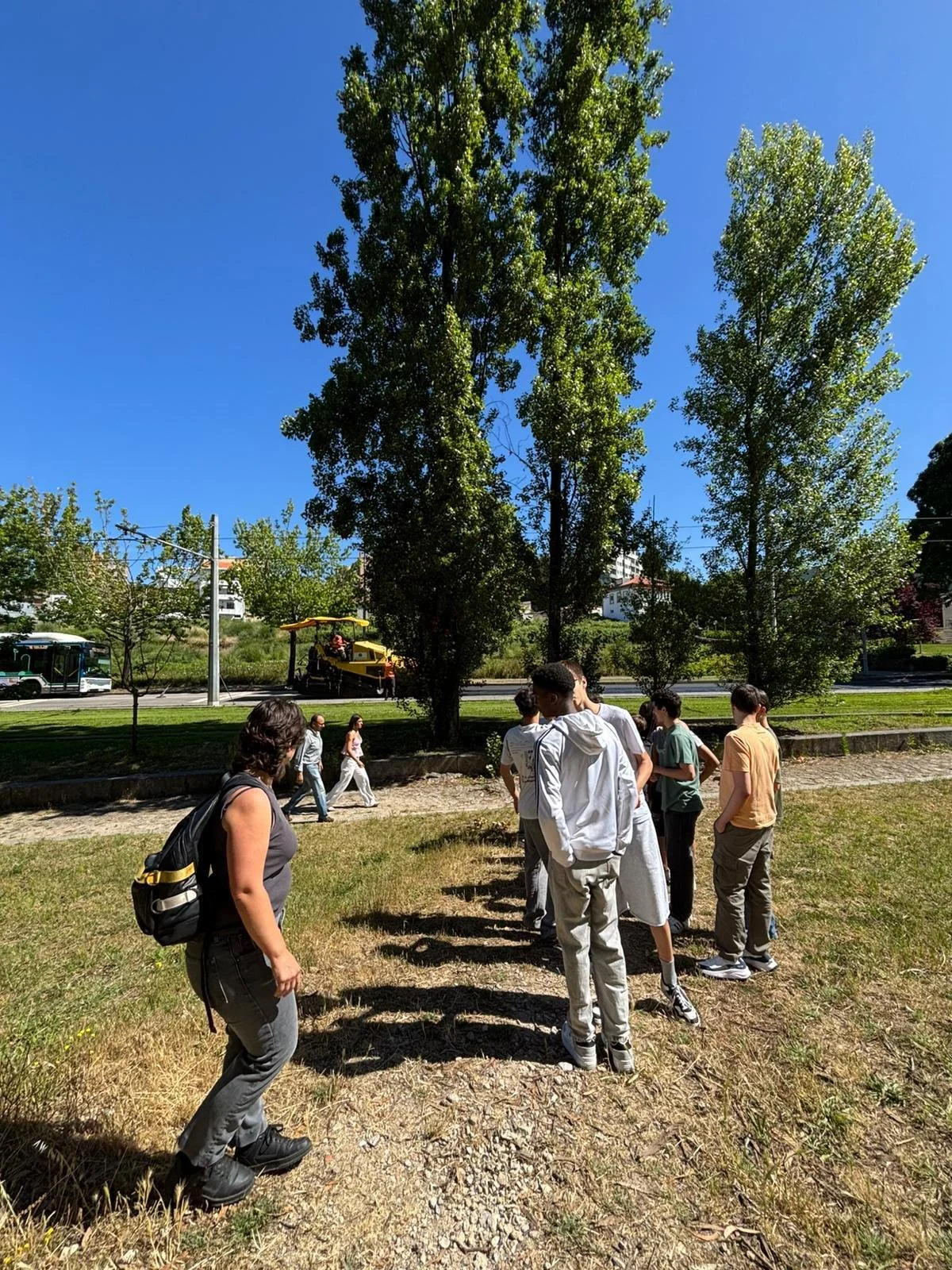
Matosinhos organised an event at Parque de Real bringing together around 100 participants to take part in an exploratory walk to better understand the pros and cons of the current park. Participations also carried out biodiversity surveys learning more about the local flora and fauna. This event strengthened connections between project partners (University of Porto and the Municipality) and local citizens ensuring a shared vision for the future of the park.
Co-creating Green & Climate Resilient Cities in Delft
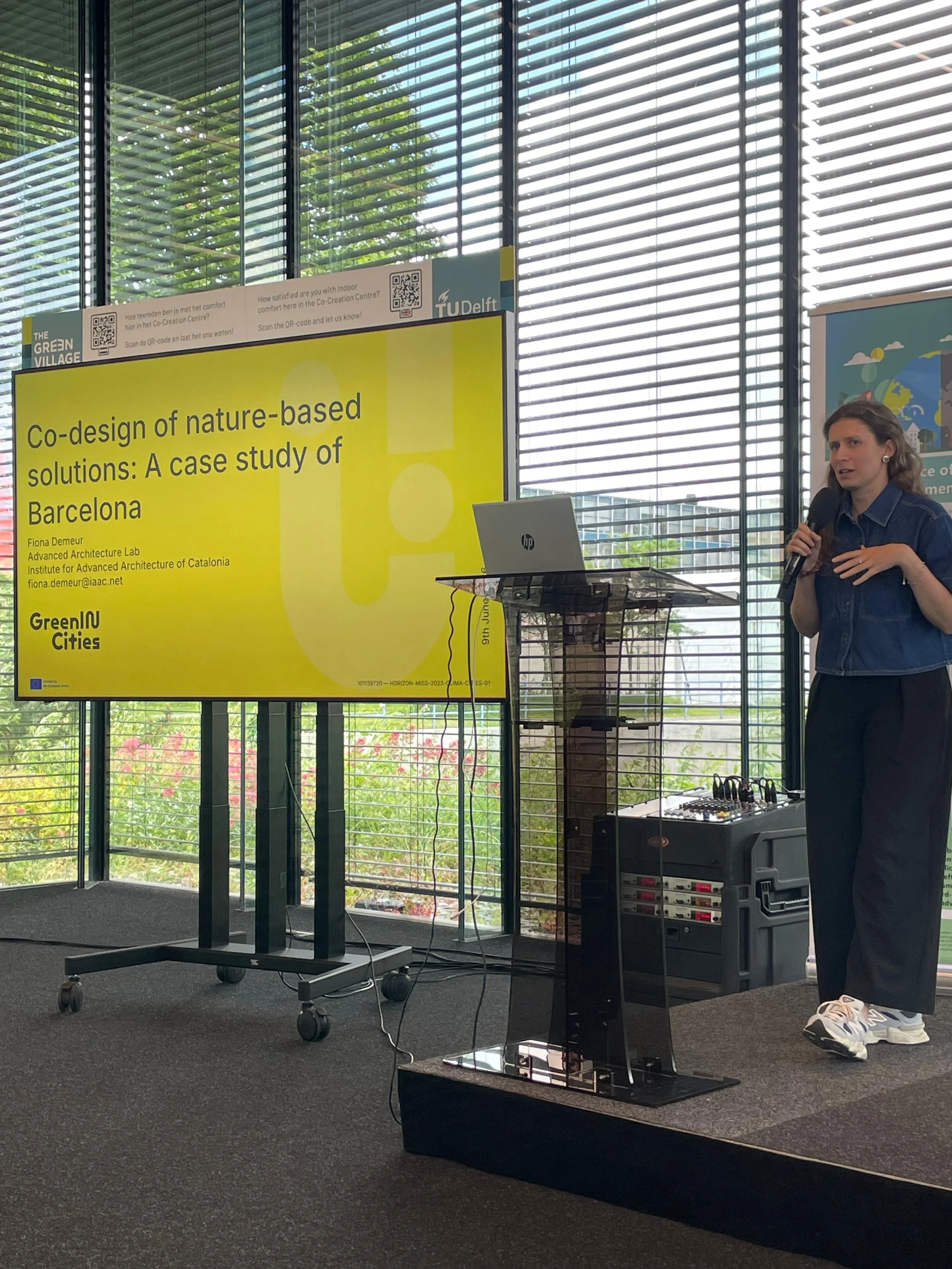
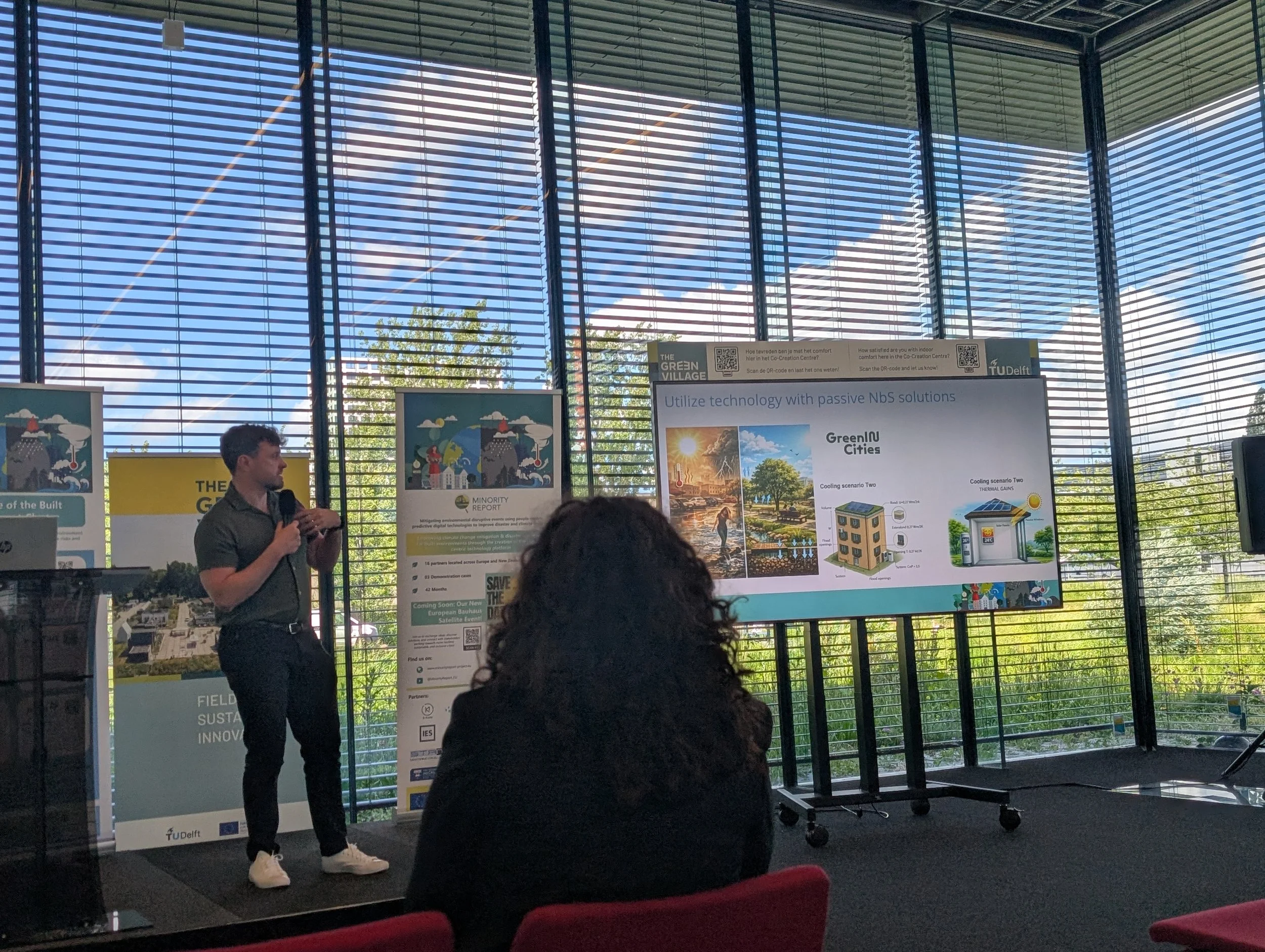
Invited to join the climate resilience cluster in Delft for their first international event, IAAC travelled to represent GreenInCities and bring the more-than-human approach to the topic of A Place-Based Approach for Holistic Resilience & Nature-Based Strategies. IAAC presented the co-creation process and pilot of Barcelona, explaining how the implementation of NbS can create a sense of place.
Joined by a NEB Policy Officer, GreenInCities was able to present our nature-based solutions catalogue and how we are tying it to the NEB Framework. GreenInCities is actively working with the NEB Framework and ambitions to understand how NbS can be evaluated in relation to NEB principles. The final catalogue will be made available in 2027.
Additionally, IES presented the research they are developing regarding the thermal comfort index and how we are developing this further in GreenInCities to run the analysis for more-than-humans.
Focus on Co-Ownership & Community at EURESFO in Guimaraes
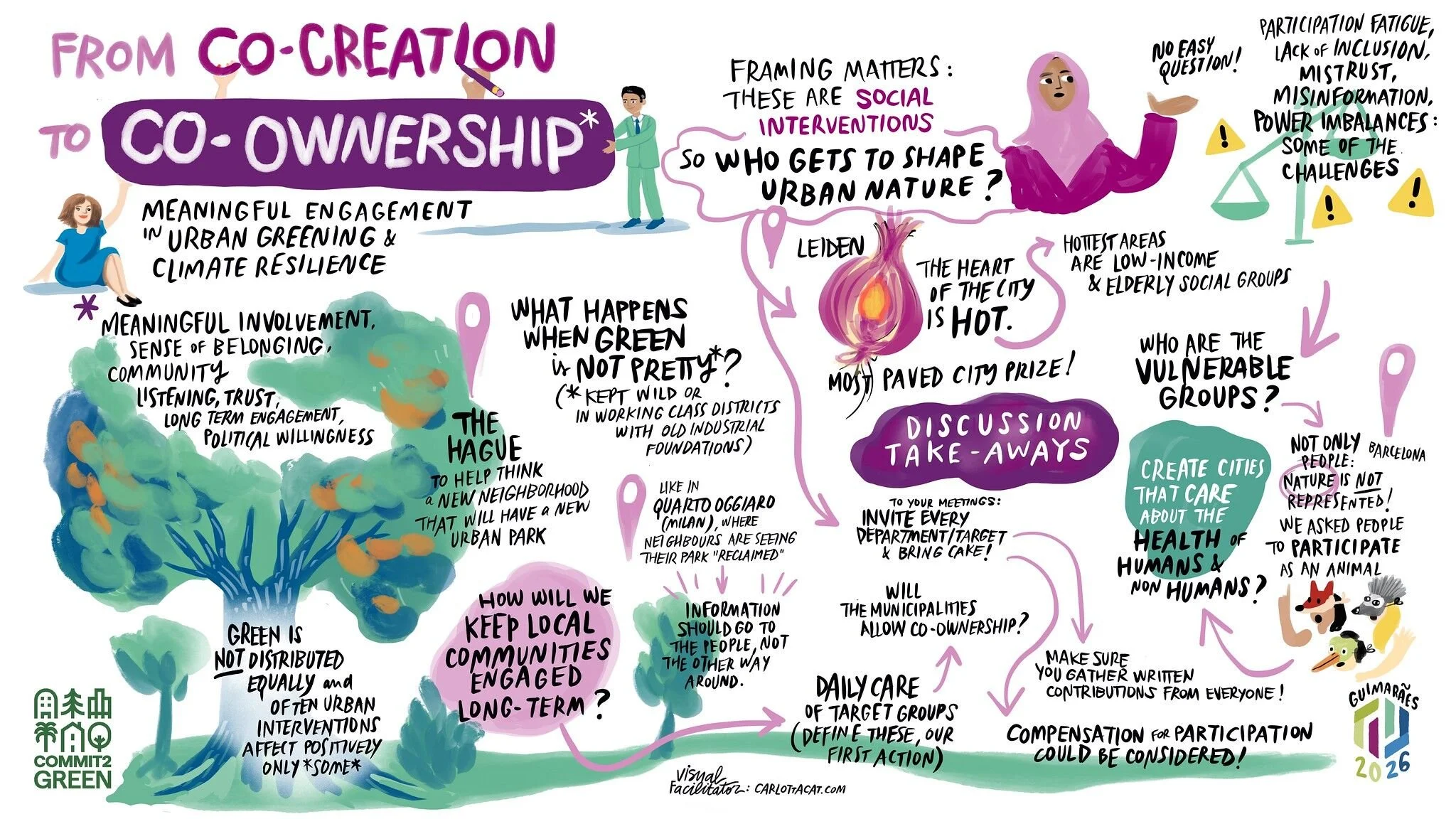
Our Project Coordinator (IAAC) joined ICLEI and sister project Commit2Green in Guimaraes to speak and participate in the workshop From Co-Creation to Co-Ownership: Meaningful Engagement in Urban Greening and Climate Resilience. Bringing challenges as catalysts for the workshop discussion, IAAC once again highlighted the more-than-human approach to urban greening and resilience, cementing our position on the topic.
Building Bridges at the New European Bauhaus Fair in Brussels
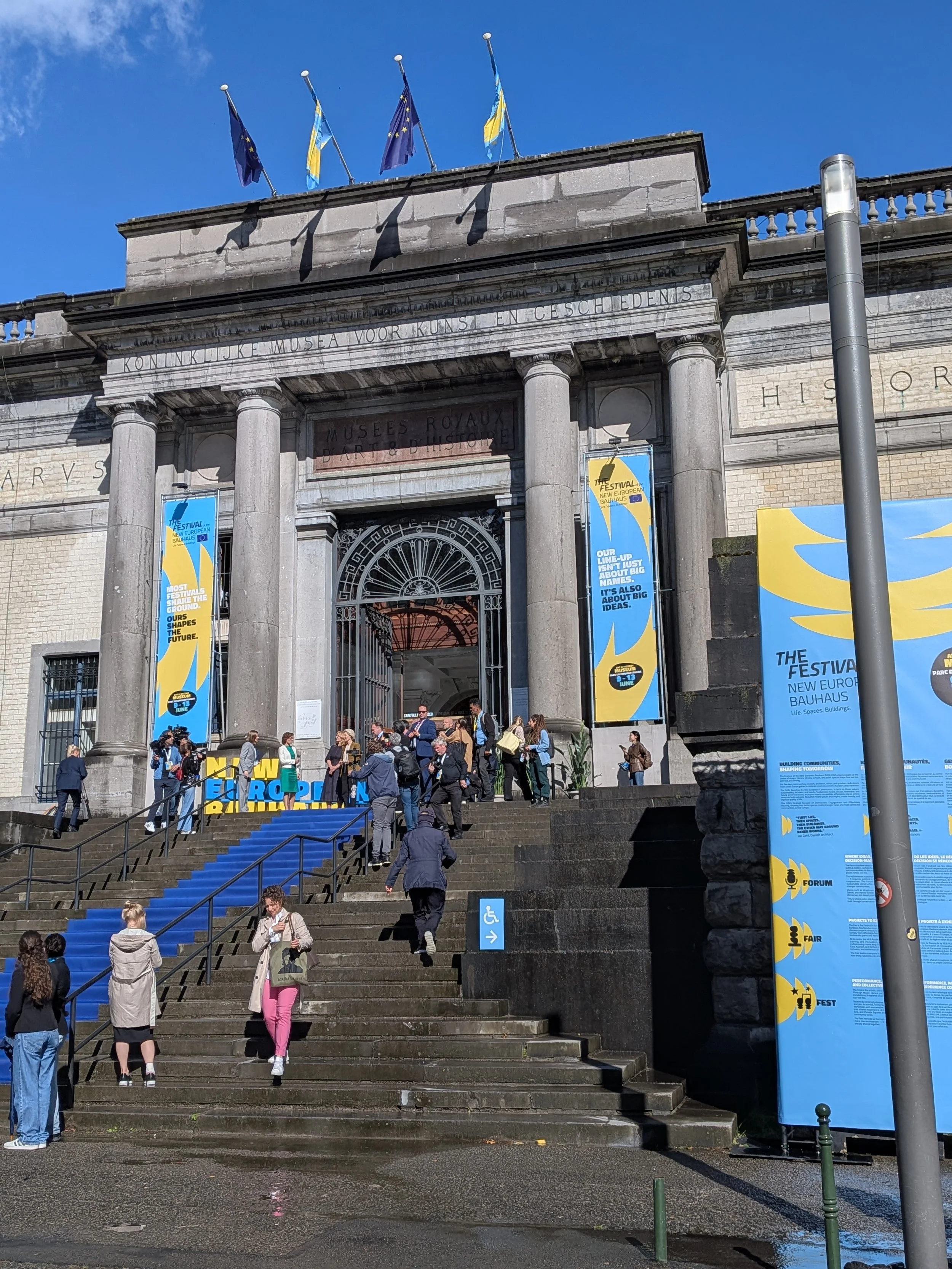
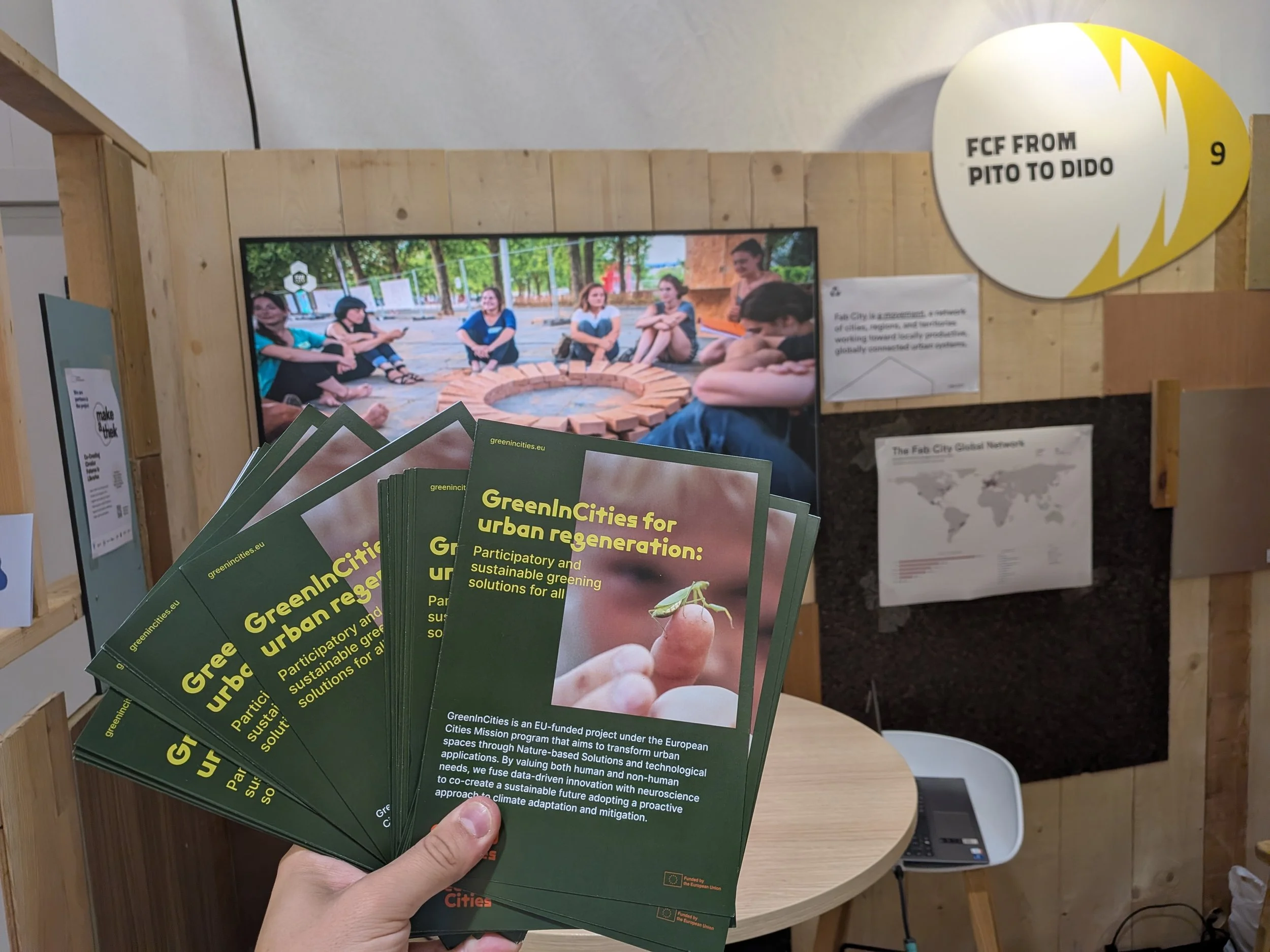
GreenInCities was part of the Fab City Foundation’s (FCF) booth at the NEB Festival Fair in Brussels. On behalf of GreenInCities, the FCF team spent the week building relationships with city representatives, researchers, designers, and fellow Horizon Europe project teams, distributing materials and sharing the GreenInCities story. The goal was to strengthen GreenInCities relationship with NEB and explore new partnerships and collaborative opportunities.
Reimagining Our Cities through the More-than-Human Outlook
While many focus on designing cities for humans, GreenInCities goes beyond this approach looking at how the more-than-human stakeholders (flora and fauna) can be represented through the co-creation process. In order for cities to thrive we need to support the ecosystems and this means creating spaces where humans co-exist with more-than-humans. Reflecting on all the events GreenInCities has participated in, it has become clear that the added value the project is bringing to climate adaptation and urban greening is the more-than-human approach which goes beyond the typical human-centered approaches.
Learn more about our pilots and more-than human approach in upcoming articles and social media posts.
